Cats and Dogs
TL;DR: Who is Geoffrey Hinton? The story of one of the 'godfathers of AI' and his breakthrough work on neural networks that made modern generative AI possible.
- Hinton's work on backpropagation and deep learning laid the foundation for current AI capabilities.
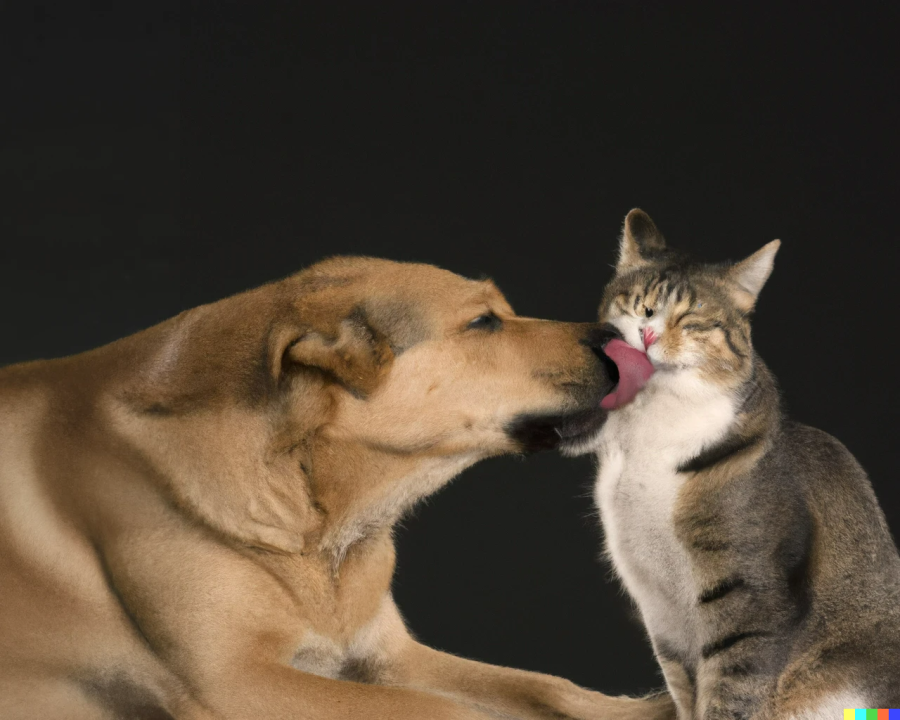
- The 2012 ImageNet breakthrough (cats and dogs classification) proved neural networks could match human performance.
- Understanding AI pioneers helps demystify where these technologies came from and where they might go.
Originally published on LinkedIn on September 29, 2022
What do Canada, artificial intelligence, and photos of cats and dogs have to do with each other? Professor Geoffrey Hinton.
It was a Cornell University psychology professor, Frank Rosenblatt, who first proposed and tested the idea of “neural networks” in the 1950s. His invention, the Perceptron, attempted to emulate what scientists understood about how neurons in the human brain work with a computer. By the time I was in college in the late 1980s the idea that we could build computational equivalents of human neurons had largely been discarded although it was still considered a fun side project in computer science classes. But Hinton never gave up on the idea.
As a professor at the University of Toronto, Hinton continued to explore what it would take to do useful work with neural networks. Just ten years ago his persistent belief and continuing research into the concept paid off when, as a part of a Google research project, neural networks were used to successfully identify pictures of cats in YouTube videos. This was done without ever defining what a cat was – the neural network generated the definition of what a cat looked like dynamically out of the images.
In 2012 Hinton and his team from the University of Toronto published a paper explaining how to scale this approach and demonstrated that they were able to correctly identify dogs or cats 75% of the time from a large dataset of photographs - an unprecedented feat at the time.
How we got here: When reading about today’s breakthroughs in artificial intelligence you will hear concepts that Hinton pioneered, (I will explore many in future editions of this newsletter) including – back-propagation, capsule networks, deep learning, convolutional neural networks, etc. Hinton is rightly considered one of the geniuses who created today’s artificial intelligence.