Cultural Inheritance: From Genes to Groups
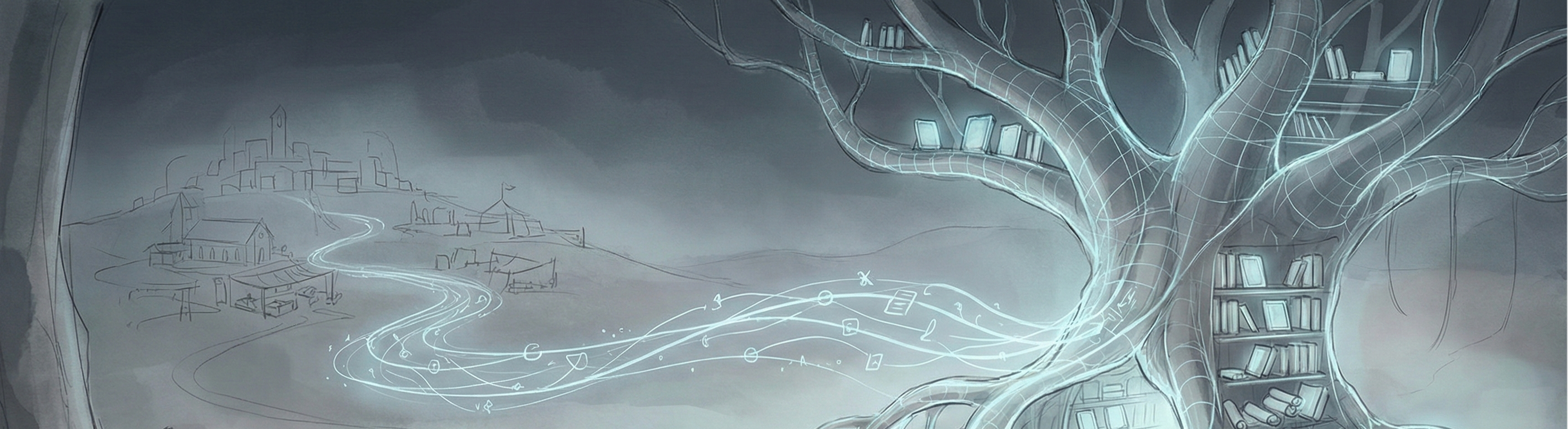
Whether at work or in the communities we live within, we transmit strategies culturally, through language, imitation, tools, and institutions, orders of magnitude faster than genes. In volatile environments, cultural inheritance is the dominant channel of adaptation. Encouraging and rewarding employees to share practices can accelerate adaptation to AI and help these skill jump from one team to another.
There are several useful ways to design a culture which transmits adaptation. First, explore what can be created as a store of the knowledge to be transmitted so that it can be consumed by others. Before we had written language, storytellers would repeat the same story to reinforce learning. Books accelerated our ability as a species to transmit knowledge and institutions such as schools became the sharing platform for transmission. Similarly in business we need artifacts for storing knowledge and platforms for transmission, ideally one which tracks and promotes successes. Examples might include rubrics, checklists, templates, prompt libraries, even “before/after” galleries. These will all help knowledge grow beyond the first individual to have had the insight/experience to expand throughout a team or company.
Second, those systems and structures which track and promote success should also be designed to encourage repetition and provide rewards. These help turn knowledge into repeated behaviors. Organizations can positively encourage change by utilizing the mechanisms discussed earlier in the section on phenotypic plasticity: feedback and repetition. Try to begin reviews by naming the learning goal and end with the reward signal you’ll feed back. Establish standing meetings or checkpoints to encourage repetition
And we’ll continue to return to reducing stress through practices such as apprenticeship: pair novices with practitioners in real work. Make the invisible visible: narrate decisions; show “why,” not just “what.” Remember that plasticity has fuel costs and stress narrows it. Understand what organizations can do to reduce stress and thereby enhance the ability to learn and change.
Here is a five-minute ritual at the end of a learning experience: “What moved? What will we reward? What will we try next?” Identifying what is important and making it visible will encourage other teams to copy and reuse the learning. That’s cultural inheritance in action: practices that survive because people can feel and understand why they are valuable.