Home Robotics in 2026
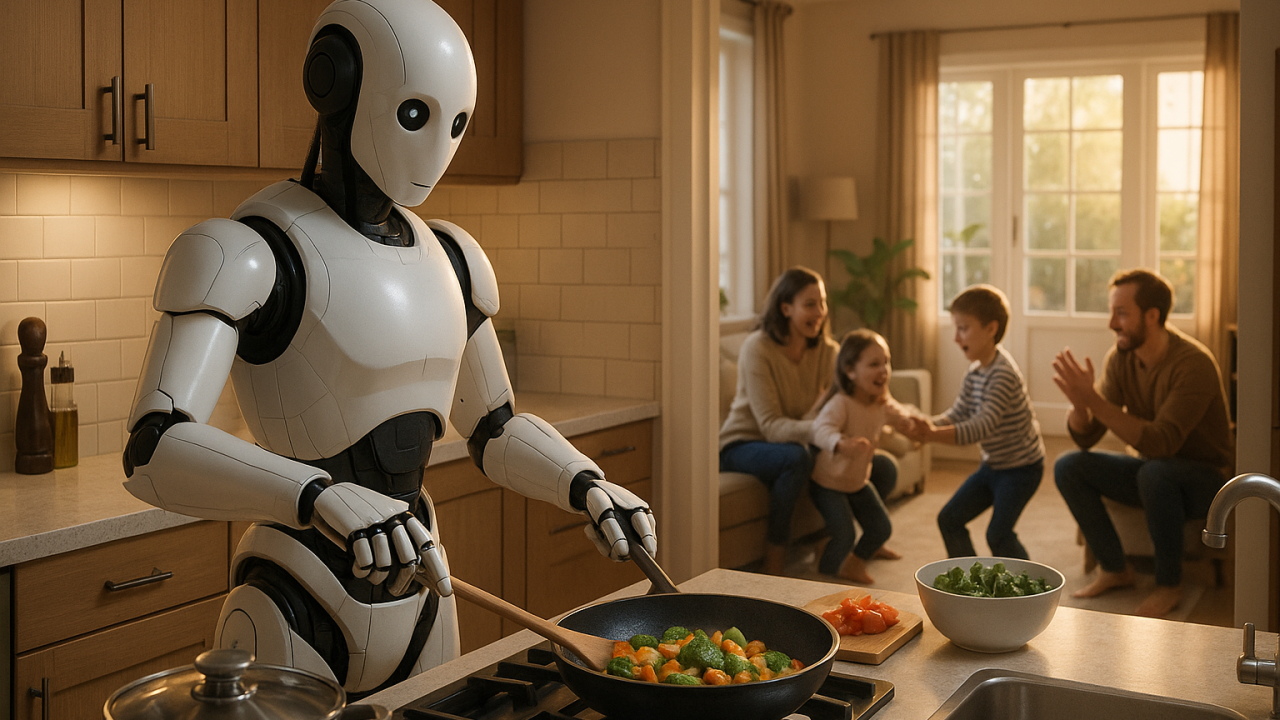
Worthwhile listen - the NYTimes “Hard Fork” podcast hosted by Kevin Roose and Casey Newton - an interview with Bernt Bornich, chief executive of 1X. You may have heard the news, but if not here is the wake up call - 1X is going to deliver robots into homes in 2026. So unless you think they are lying or you predict they will fail, get ready for a big cognitive shift in “what is possible” in the world in the next year.
Here are some key takeaways from the interview with the goal of making you more interested in listening to the episode:
The price is astonishingly low - $20,000 outright but also about $500 a month for just a 6 month commitment, so try it out for just $3,000
Part of the low price is because early adopters agree to allow tele-operators (humans remotely operating) to guide the robots and as Bornich points out, this is the cheapest possible way for the company to amass the real world training data they need to get to full autonomy
Speaking of early adopters - the company says that demand has exceeded their expectations and they now expect to ship 10,000 robots next year
With 10,000 robots they will be amassing more data every day than is uploaded to Youtube daily and it will all be targeted training data helping them improve their software and future robot designs
Bornich details how they have scrupulously designed the tele-operator setup to protect the privacy and safety of their customers - the description was impressive (go listen)
There are a few drawbacks which Bornich is quite clear about as he wants initial customers to have realistic expectations: the robot operates at maybe 20% of the speed that a human would work at. So a task that you and I might take a few minutes to do (load a sink full of dishes into the dishwasher) might take the robot 15 or 20 minutes. Second, the robot isn’t yet as good as a human at precision tasks. So folding laundry is OK but not as good as you would get from a person. And for complex tasks you may need to “schedule” time with a tele-operator, say being a bartender at a house party you are holding.
None of these are likely to be barriers for early adopters, but will clearly all need to be solved in order to get “across the chasm” into an early majority buyer’s home. When does Bornich think this happens? He’s predicting 80,000+ robots will be purchased in 2027 and that by then many of these problems will be resolved.
Three other takeaways for me from the interview –
Bornich talks about early feedback that they have had from people with disabilities or elderly people who can use help once in a while. The facilitation of daily life to just have extra hands to hold something, pick something up, fetch something… can be a huge quality of life enhancement
He also talks about how he uses the robot himself and said that he really enjoys how just using the robot as his interface to AI is a huge improvement over using his phone or computer. It introduces a more natural presence into his home to have the robot able to research, answer questions, help solve problems, etc. all of which are just extensions of the ability for it to connect to leading large language models/AI systems. But he also pointed out the advantages of the interface in which he can gesture or point and also that the robot can detect “addressee” and know if it is being spoken to or whether family members are just speaking to each other. So all of this adds up to a substantially improved AI presence
Lastly a really interesting insight about how AI will continue to add learning data over the next several years is his observation about how much data can be gathered by these robots operating in human environments. Only a fraction of what humans experience is on the Internet or captured in books, robots as our everyday companions will have access to the rest of human experience. This experiential and observational data will make our robot/AI companions even more capable and insightful as we learn to co-exist with them.
If you have been reading my newsletter for any length of time you know that I am a techno-optimist. I can see that many will hear about these robots and have anti-robot and anti-AI feelings. But actually the ability to hand-off domestic tasks to a robotic assistant will in my opinion substantially add to the time that we can be present in a quality way with our friends and family members. And the implications of productive humanoid robots for the rest of the economy are profound. We just need to make the right decisions about how these benefits are distributed in a way which decreases inequality. Prepare for that as the next battle to confront in the near future.