Preface: A letter to the overwhelmed
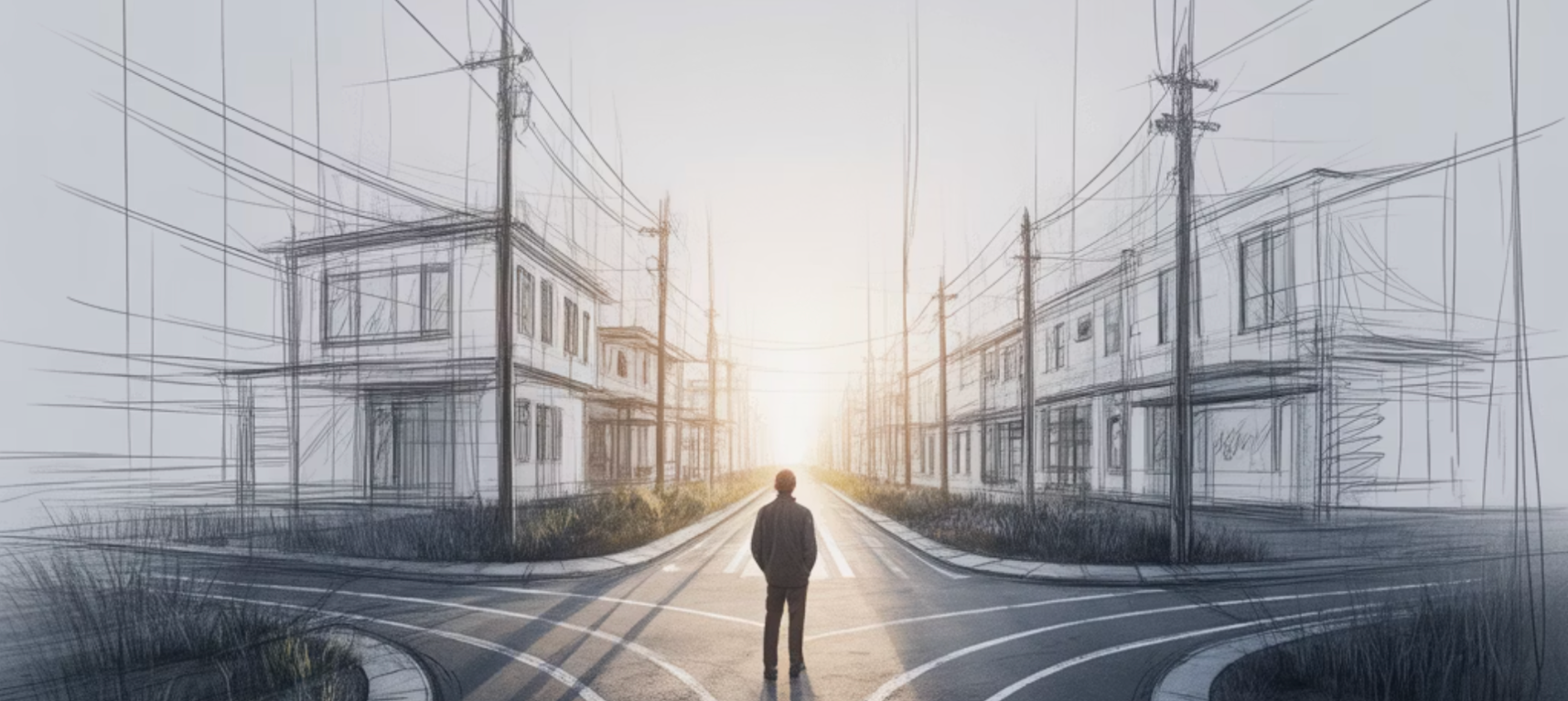
Have you been feeling like Samantha lately?
Maybe you’ve sensed the ground shifting under your feet. Nothing dramatic, just a quiet certainty that the way work works is changing. Or maybe you’re already in the thick of it: new tools, new dashboards, new acronyms, a new vocabulary for value. Perhaps your team is piloting AI workflows and you’re torn between curiosity and fatigue. Perhaps you’ve been told that it’s time to “re-skill,” and you’re not sure whether that invitation feels like opportunity or erasure.
Wherever you are on this path, I’m writing to you.
You might be just a little AI-curious, keeping an eye on headlines, noticing how often “generative” shows up in meetings, wondering if this is another hype cycle or something deeper. You might be experimenting at the edges: a prompt here, an automation there, a few “what if we…” tests that make the workday faster but not yet different. You might be knee-deep in transformation, sprinting to learn while projects keep moving, trying to stay generous and open when your identity feels stapled to the way you’ve always contributed. You might be resisting, not from stubbornness but from care: care for craft, for meaning, for the parts of work that make us feel human. Or you might be exhilarated! Eyes bright, sleeves rolled up, convinced that this is the most thrilling creative frontier of your career.
This website is for all of us.
It’s a companion for the overwhelmed and a compass for the eager; a guide to help you see the pattern in the noise and to practice the kind of adaptability that’s learnable, trainable, and ethical. Adaptability, as I’ll use the term, is your capacity to sense change, update your mental models, and reconfigure your behaviors and tools so you can thrive in new conditions. Not by abandoning who you are, but by composing your strengths differently.
Perhaps you’re carrying a knot of fear. What if I can’t learn fast enough? What if what made me valuable isn’t valuable anymore? And you’re not alone. Being overwhelmed and feeling confusion are a reasonable response to the pace and scope of change right now. Let’s name that honestly at the start, because unspoken fear hardens into resistance, and spoken fear loosens into movement. This letter begins there, not to linger in anxiety but to build the foundation for action.
You’ll see Samantha again in these pages because she stands where so many of us stand: at a crossroads between what we know we’re good at and what the world is asking for next. The decision ahead isn’t a binary. It isn’t old versus new, human versus machine. It’s a choreography problem: how to arrange your uniquely human capabilities with increasingly capable tools so the whole is greater than the parts.
Here’s how we’ll travel together:
First, we’ll make sense of why the moment feels so different. We are being asked to adapt to change at a faster and faster pace; what took decades now happens inside a single role and sometimes a single quarter. We’ll borrow Toffler’s term “future shock” and and explore why, in a world moving this fast, yesterday’s strengths can quietly become today’s constraints.
We’ll get precise about adaptability: which is not a personality trait you either have or don’t have, but is a set of biological, psychological, and cultural capacities you can train. You can learn to adjust while seeing how those adjustments ripple through teams, institutions, and society.
We’ll explore how tools change what’s possible and how “affordances” (what a tool makes easy) shape our choices. How extending our minds with machines can be powerful and disorienting. We’ll also face the shadow side, polarization by skill and the risk of tool overwhelm, and how if done wrong these tools will create more inequity.
We’ll talk honestly about the inner arc of change: not just the to-do list, but the emotions. We’ll replace tidy myths with evidence-based maps and practice psychological flexibility. The challenge is to accept what’s hard, clarify values, and take small, committed steps.
Then we’ll get practical: mindset, skillset, toolset. We’ll regulate the body so the mind can learn; build learning habits that actually stick; shape environments that reduce friction; design networks that expand opportunity; and run tight agility loops so you can move from guessing to knowing faster without burning out.
We’ll reframe the tech itself: not as a one-to-one substitution for human work, but as a ladder from substitution to amplification to transformation and focus on where humans remain uniquely valuable when we design hybrid systems on purpose.
Finally, we’ll lift our eyes to look at a broader sense of meaning in our lives and close with a concrete plan you can start right away: near term horizons which turn insights into momentum.
A thread runs through the whole journey: moving from coping to shaping. Coping says, “I’ll try to survive the change.” Thriving says, “I’ll participate in how this change unfolds for me, my team, and, where I can, my community.” That’s not a motivational slogan; it’s a stance you can practice, step by step, with tools that make agency visible and cumulative.
If you’re skeptical, good. Keep your skepticism; it’s a form of care. Bring it with you and test these ideas against your reality. If you’re excited, good. Bring your energy and your experiments, and let’s make sure speed doesn’t outrun wisdom. If you’re tired, especially if you’re tired, good. We’ll right-size the work so progress is possible on normal days, not just heroic ones.
This isn’t a book that will tell you to become someone you’re not. It’s a book that will help you become more yourself. Clearer about what you do uniquely well, braver about learning in public, and more intentional about how you weave human judgment with machine capability. You don’t need to memorize jargon to belong here. You don’t need to love every tool. You only need to be willing to notice, to experiment, and to keep choosing the next useful step.
If you’ve been feeling like Samantha lately and feeling scared some days, skeptical others, occasionally lit up by what’s newly possible then take a breath. You’re not behind. You’re right on time for the work of this era.
I’m glad you’re here. Let’s walk together.
Ted Shelton
San Francisco, CA
January 2026